DHA has become one of Lahore’s most in-demand areas for premium services, and tattooing is no exception. If you’re looking for a tattoo studio in DHA Lahore that treats the experience with the same privacy and care as any other high-end service in the neighbourhood, here’s what to expect.
Why DHA Suits a Premium Tattoo Experience
DHA Phase 7 offers an environment that’s easy to reach, well-maintained, and discreet — ideal for clients who want a comfortable, unhurried session away from crowded commercial strips.
Appointment-Only, Not Walk-In
Devil Art Studio operates strictly by appointment. That means no waiting room full of strangers, no rushed timeline — just your artist, your design, and the time needed to get it right.
13 Years of International Experience, Local Convenience
Our lead artist has spent 13 years tattooing internationally, bringing global technique standards to a studio that’s a short drive from most of DHA and surrounding areas.
Hygiene Standards That Match the Setting
Sterilised equipment and disposable needles are standard practice here, matched to the same level of care you’d expect from a premium studio anywhere in the world.
What You Can Get Done
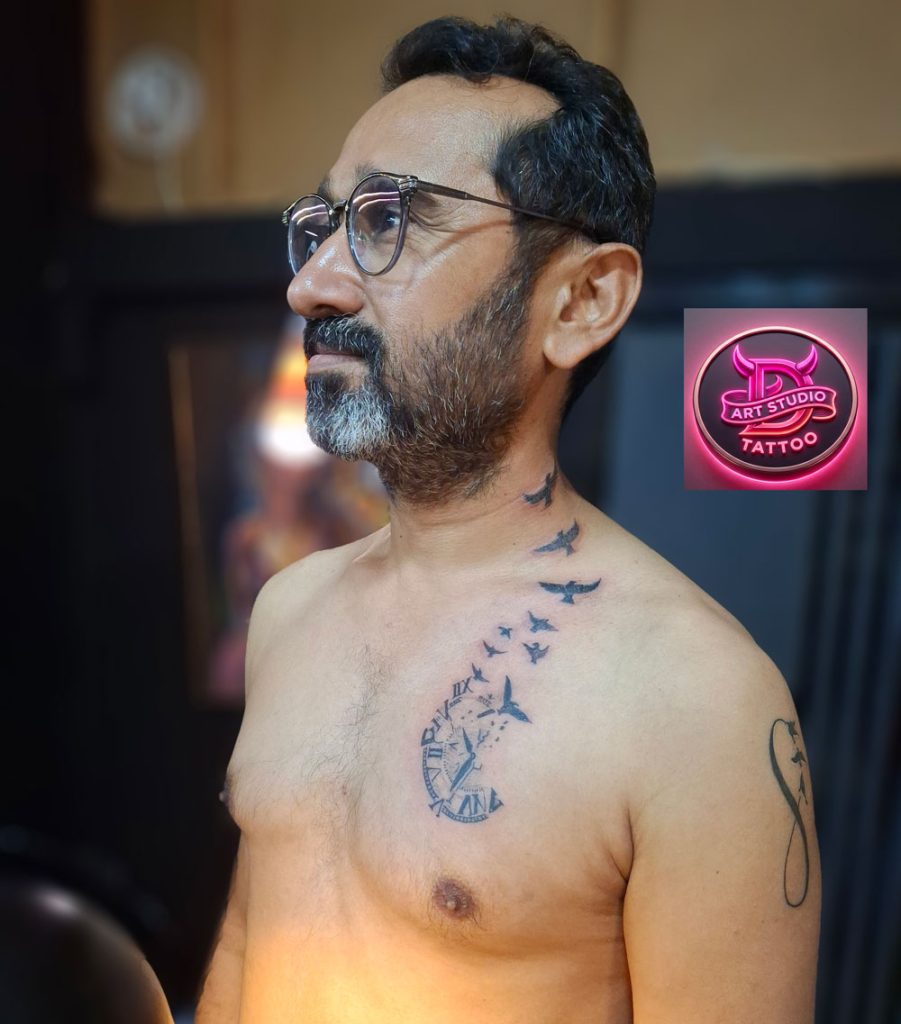
From custom and fine line tattoos to realism, cover-ups, lettering, and piercing, our DHA Phase 7 studio covers the full range of services — each one designed around the individual client rather than picked from a wall.
Japanese tattoos, known as Irezumi in their homeland, carry centuries of cultural history and symbolism behind every design. Recognizable for their bold outlines, flowing composition, and rich mythological imagery, this style remains one of the most respected traditions in tattoo art. Here is what gives Japanese tattoos their distinctive meaning and visual power.
The Roots of Japanese Tattoo Art
Japanese tattooing traces back hundreds of years, originally linked to woodblock printing artists who transferred their illustrative skills onto skin. Over time, the style developed its own visual language built around flowing water, wind bars, and clouds that connect different elements of a larger design into one cohesive scene.
Common Motifs and Their Meanings
Koi fish represent perseverance and strength, often shown swimming upstream against a current. Dragons symbolize wisdom and protective power, while cherry blossoms represent the beauty and fleeting nature of life. Tigers, snakes, and phoenixes each carry their own symbolic meaning, making it worth researching a motif’s background before choosing one for a permanent piece.
Traditional vs Modern Japanese Tattoo Approaches
Traditional Japanese tattoos, known as Irezumi, were historically applied using hand tools called tebori, a slow and meticulous method still practiced by some specialists today. Modern artists often use tattoo machines to achieve the same bold outlines and detailed shading, blending centuries-old imagery with contemporary technique and often a personal artistic twist.
Why Composition Matters So Much
Unlike many Western tattoo styles that work as standalone pieces, Japanese tattoos are traditionally designed as part of a larger, flowing composition meant to wrap around the body. Background elements like waves and clouds are not just filler, they are essential to connecting the main subjects and creating visual movement across large-scale work like sleeves or back pieces.
Color Choices in Japanese Tattoos
Bold reds, blues, and blacks are traditional staples of Japanese tattoo art, chosen for their vibrancy and contrast against the skin. Many artists also work in a black and grey palette for a more subdued, modern take on the style, while still keeping the bold outlines and layered composition that define the tradition.
Best Placements for Japanese-Style Pieces
Because Japanese tattoos are designed to flow across the body, larger canvases like the back, chest, full sleeve, or leg tend to work best for capturing the full scope of the composition. Smaller standalone motifs can still work on more compact areas, but the style truly shines when given enough space to tell its full visual story.
Finding an Artist Who Respects the Tradition
Because Japanese tattoo art carries deep cultural weight, it is worth choosing an artist who understands and respects the traditional symbolism and composition rules rather than just replicating the visual style without context. Ask about their training and influences, and review their portfolio for pieces that show a genuine understanding of the tradition’s flow and meaning.
Final Thoughts
Japanese tattoos combine centuries of symbolism with striking visual composition, making them a meaningful choice for those drawn to bold, storytelling body art. Take time to understand the imagery you choose, plan for a design that flows naturally with your body, and work with an artist who honors the depth of this respected tradition.