Tattoo Touch-Up in Lahore: When Does Your Tattoo Need One?

Even a well-done tattoo can fade, blur slightly, or heal unevenly in small patches over time. Here’s how to know when a tattoo touch-up in Lahore is worth booking.

Sun Exposure Is the Most Common Cause

Unprotected sun exposure is one of the biggest reasons tattoos fade over the years. Consistent sunscreen use on tattooed skin slows this down significantly.

Signs Your Tattoo Needs a Touch-Up

Patchy ink saturation, softened line edges, or areas that look noticeably lighter than the rest of the design are common signs it’s time for a refresh.

Healing Issues From the Original Session

Occasionally, small areas don’t heal evenly the first time due to skin type or aftercare during the healing window — this is normal and usually easy to correct.

Touch-Ups Are Usually Quick

Most touch-up sessions are shorter than the original tattoo appointment, focused only on the areas that need refreshing rather than redoing the whole piece.

Aftercare Still Matters the Second Time

Treat a touch-up with the same aftercare discipline as a new tattoo — proper healing extends how long the refreshed ink stays sharp.

Book a Touch-Up

Message us on WhatsApp: 0333-2999499 with photos of the area that needs attention, or read our tattoo care guides.

10 Tattoo Mistakes You Should Avoid Before Getting Inked

A tattoo is meant to last, which makes the decisions leading up to it worth slowing down for. Most regrets we see at the studio trace back to a handful of avoidable mistakes, rushing the design, picking the wrong artist, or skipping aftercare. Here are ten of the most common ones, and how to steer around them.

1. Choosing a Studio Based on Price Alone

The cheapest quote is rarely the safest or best-looking option. Hygiene standards, artist experience, and quality of ink all cost money, and cutting corners on any of them shows up in the healed result. Our tattoo cost guide breaks down what actually goes into pricing so you can compare studios fairly.

2. Not Researching the Studio or Artist

Every artist has a style they’re strongest in, realism, blackwork, fine line, and so on. Booking with whoever’s available rather than whoever fits your design idea often leads to a result that technically works but doesn’t feel like what you pictured. Look through portfolios first, our guide on what makes a studio worth choosing covers what to look for.

3. Skipping the Consultation

Walking in and getting inked the same day, with no discussion of placement, sizing, or how the design will age on your specific skin, is how avoidable regrets happen. A proper consultation catches problems before they’re permanent.

4. Picking a Design That’s Trendy, Not Personal

Trend-driven tattoos can look dated within a few years. Designs with real personal meaning, or classic styles that don’t chase a specific trend, tend to age much better both visually and emotionally.

5. Underestimating Placement

Skin over joints, ribs, and other high-movement or high-friction areas ages tattoos differently than flatter areas like the forearm or thigh. A good artist will talk you through how your chosen placement affects both healing and long-term appearance.

6. Getting Inked Without Understanding the Pain Involved

Going in with no idea what to expect can turn a manageable session into an overwhelming one. Reading up on what the pain actually feels like beforehand helps you prepare mentally and physically.

Healed tattoo result showing the importance of proper aftercare and technique
A cleanly healed result, the kind of outcome careful planning and proper aftercare make possible.

7. Ignoring Aftercare Instructions

This is probably the single biggest cause of avoidable problems: infection, faded patches, and blown-out lines almost always trace back to poor aftercare. Following our tattoo aftercare guide closely for the first few weeks makes a real difference in how the finished tattoo looks a year later.

8. Making Impulsive Decisions

Getting a name, a spontaneous design, or anything permanent on a whim is one of the most common sources of later regret, and a big reason people eventually look into removal or cover-up options. Sitting with a design idea for at least a few weeks before booking helps confirm it’s something you’ll still want years from now.

9. Not Asking About Hygiene Practices

A trustworthy studio should be transparent about single-use needles, sterilization, and clean workspace practices without you having to press for answers. If a studio is vague about this, treat it as a warning sign.

10. Comparing Your Healing to Someone Else’s

Everyone’s skin heals differently based on placement, skin type, and how well aftercare is followed. Panicking because your tattoo looks different at day five than a friend’s did is usually unnecessary, if you’re following aftercare and something genuinely seems off, ask your artist rather than guessing.

Getting a tattoo you’ll love for years comes down to slowing down on the decisions that matter: the studio, the artist, the design, and the aftercare. Want to see how we approach all of this in practice? Take a look inside Devil Art Studio.

Tattoo Aftercare Guide: How to Protect Your New Tattoo

The tattoo itself is only half the process, how you treat it over the next two to four weeks determines whether it heals into crisp, saturated linework or ends up patchy and faded. Here’s exactly how to take care of a new tattoo from Devil Art Studio, Lahore.

The First 24 Hours

Leave the initial wrap or film on for the amount of time your artist specifies, usually a few hours, then wash gently with lukewarm water and a fragrance-free antibacterial soap. Pat dry with a clean paper towel, never rub, and avoid re-wrapping unless your artist has told you to use a second-skin style bandage.

Cleaning During the First Week

Wash the tattoo two to three times a day with clean hands, using light, circular motions. Apply a thin layer of the aftercare product recommended by your artist, more is not better here, a thick layer of ointment can actually trap moisture and slow healing.

Sterile tattoo aftercare and hygiene supplies at Devil Art Studio Lahore
Proper aftercare starts with the same hygiene standards used during the tattoo session itself.

What Peeling and Itching Actually Mean

Around day four to seven, the tattoo will typically start to flake and peel like mild sunburn, and it will almost certainly itch. This is normal. Resist the urge to pick or scratch, patting gently is fine, but pulling at peeling skin can pull ink out with it and leave patchy spots that need touching up later.

What to Avoid for the First Two to Four Weeks

Skip swimming pools, the sea, and long soaking baths, submerging a healing tattoo raises infection risk significantly. Avoid direct sun exposure on the area, keep gym sessions light enough that you’re not sweating heavily directly onto it, and don’t let tight clothing rub against fresh linework.

Signs You Should Actually Be Concerned

Some redness, mild swelling, and warmth in the first couple of days is normal. Spreading redness, worsening pain after day three, pus, or fever are not, and warrant checking in with your artist or a doctor. If something looks off, our guide on whether tattoos are safe covers the hygiene standards that should have been in place from the start to prevent this.

Once It’s Fully Healed

Full healing typically takes two to four weeks on the surface, though the deeper skin layers continue settling for a couple of months. Once healed, moisturised skin and sun protection, ideally SPF 30 or higher whenever it’s exposed, will keep colours and linework looking sharp for years. If you were nervous about the process itself, our tattoo pain guide and first tattoo guide cover what to expect before you’re even at this stage.

Questions About Your Healing Tattoo?

If anything about your healing tattoo looks or feels unusual, message Devil Art Studio on WhatsApp at 0333-2999499. We’d rather answer a quick question early than have you guess and risk the result.

Tattoo Ink Reaction vs Normal Healing: How to Tell the Difference

Almost every new tattoo goes through redness, mild swelling, and itching before it settles into normal skin. That overlap is exactly why so many people worry unnecessarily — or, less often, miss a genuine reaction because it looked similar to normal healing at first. Here’s how to actually tell the two apart.

What Normal Tattoo Healing Looks Like

In the first few days, mild redness, warmth, and swelling around the tattooed area are expected, along with some oozing of excess ink and plasma. By the end of the first week, the area typically starts to peel and flake like a light sunburn, with itching that peaks around this stage. By two to three weeks, most tattoos look mostly settled, with only minor residual dryness.

Timeline of Normal Healing

Days one to three: redness, swelling, tenderness. Days four to fourteen: peeling, flaking, itching as the top layer renews. Weeks three to four: color settles, texture returns to mostly normal, with the deeper skin still healing invisibly underneath for a few more weeks. Every skin type heals at a slightly different pace, but this general pattern holds for most healthy tattoos.

Signs That Point to a Reaction Rather Than Healing

Redness or swelling that gets worse instead of better after the first week, itching or bumps concentrated specifically in colored areas rather than the whole tattoo, or irritation that shows up weeks or months after the tattoo seemed fully healed are all signs worth paying attention to. For a deeper look at what causes these specific reactions, see our guide on tattoo ink allergies.

Infection vs Allergic Reaction

An infection typically involves increasing pain, spreading redness, warmth, and sometimes pus or a fever, usually within the first week or two, and needs prompt medical attention. An allergic reaction tends to be itchier than painful, often confined to specific ink colors, and can appear later in the healing process or even much further down the line. Both are different from normal healing and both warrant seeing a doctor rather than waiting it out.

When Itching Is Just Itching

Itching during the peeling phase, roughly days five through fourteen, is one of the most normal parts of healing and is simply your skin regenerating. Light tapping instead of scratching, and keeping the area moisturized with a fragrance-free healing balm, usually manages it well without needing to worry.

What to Do If You’re Unsure

If something feels off and you can’t tell whether it’s normal healing or something more, don’t guess — send a clear photo to your artist or, for anything involving spreading redness, pain, fever, or persistent bumps, see a dermatologist or doctor directly. It’s always better to get it checked than to assume.

Good Aftercare Prevents Most Problems

Following your artist’s aftercare instructions closely — gentle cleaning, fragrance-free moisturizer, no swimming or excessive sun during healing, and clean hands whenever you touch the area — prevents the vast majority of complications, whether infection or irritation, from ever developing in the first place.

We’re Here to Help

At Devil Art Studio Lahore, we walk every client through proper aftercare after their session and are always happy to look at photos or answer questions during healing. If anything feels genuinely wrong, we’ll point you toward getting it checked by a professional right away.
Tattoo Touch-Up in Lahore: When Does Your Tattoo Need a Retouch?

Even the best tattoos need a little maintenance eventually. Skin changes, sun exposure adds up, and fine details are naturally the first to soften. Knowing when to book a touch-up — rather than waiting until a piece looks genuinely worn — is the easiest way to keep a tattoo looking sharp for decades.

What Is a Tattoo Touch-Up, Exactly?

A touch-up is a shorter follow-up session where an artist goes back over an existing tattoo to refresh faded color, sharpen blurred linework, or fix small areas that didn’t heal evenly the first time. It’s not a redesign — the original artwork stays the same, it’s simply restored closer to how it looked when freshly done. If your tattoo needs more than a refresh, our guide on touch-ups versus full redesigns can help you figure out which applies to you.

Signs Your Tattoo Needs a Retouch

The clearest signs are softened outlines, patchy or dulled color, and small gaps where ink didn’t fully take during healing. If you find yourself describing your tattoo as “faded” rather than just “aged,” that’s usually a good indicator it’s time for a session.

How Soon After a New Tattoo Might You Need One?

Occasionally, a very small percentage of a fresh tattoo doesn’t heal perfectly evenly — a tiny scab falls off early, or a small patch doesn’t retain ink fully. Reputable studios, including ours, typically offer a complimentary touch-up within the first few months for exactly this reason, since it’s a normal part of the healing process rather than a flaw in the original work.

Longer-Term Touch-Ups

For older tattoos, especially those five, ten, or more years old, a touch-up is more about combating natural fading from sun exposure, skin aging, and time. If you’re curious about what actually causes that fading in the first place, our article on why tattoos fade covers it in depth.

What Happens During a Touch-Up Session at Devil Art Studio Lahore

We start by examining the piece closely, comparing it against original reference photos when available, and identifying exactly which areas need attention. Most touch-ups are quicker and less intense than the original tattoo, since the outline and structure are already there — we’re refreshing, not rebuilding.

Areas That Typically Need Touch-Ups Sooner

Hands, fingers, feet, and areas with a lot of daily friction or sun exposure tend to need touch-ups sooner than covered areas like the back or upper arm. If you have a piece in one of these higher-wear areas, it’s worth checking in with your artist every few years rather than waiting for visible fading.

Aftercare After a Touch-Up

Touch-up aftercare is essentially the same as for a new tattoo: keep it clean, moisturized, and protected from the sun while it heals, typically for one to two weeks. Treat it with the same care you gave the original piece, even though the session itself was shorter.

Book a Touch-Up at Devil Art Studio Lahore

If your tattoo isn’t looking quite as sharp as it used to, don’t wait for it to get worse. Come in for a quick assessment — most touch-ups are fast, affordable, and make a bigger difference than people expect.

Why Do Tattoos Fade? Common Causes and How to Prevent Fading

Every tattoo changes a little over the years, but some fade so slowly you barely notice, while others lose their crispness within a couple of seasons. Understanding what actually causes fading helps you make better choices — both before you get inked and in how you care for the piece afterward.

Sun Exposure Is the Biggest Factor

Ultraviolet light breaks down ink pigment faster than almost anything else. Tattoos on areas that see regular, unprotected sun — hands, forearms, feet, neck — tend to fade noticeably faster than tattoos kept mostly covered. Daily sunscreen with a high SPF over healed tattoos is one of the simplest, most effective things you can do to protect your investment.

Skin Type and Placement Matter

Areas with thinner skin or more movement, like fingers, hands, feet, and inner elbows, tend to fade or blur faster because the skin cells there turn over more quickly and the area is under more constant friction. Skin with naturally higher oil production can also cause ink to migrate slightly over time, softening fine details first.

Ink Quality and Technique

Not all ink is equal, and neither is application depth. Ink placed too shallow tends to fade quickly because it sits closer to the skin’s surface layer, which sheds and regenerates constantly. Ink placed too deep can blur or “blow out.” This is exactly why choosing an experienced, reputable studio matters — proper depth and quality pigment are the foundation of a tattoo that ages well. If a tattoo has already lost significant detail, our guide on touch-ups versus full redesigns explains your options.

Sun, Water, and Time During the Healing Window

The first four to six weeks after getting tattooed are when the piece is most vulnerable to premature fading. Swimming, prolonged sun exposure, scratching, or picking at peeling skin during this window can pull ink out unevenly before it has fully settled, leaving patchy areas that fade faster than the rest of the design for years afterward.

Color Fades Differently Than Black

Bright colors, especially yellows, light pinks, and pastels, generally fade faster and show age sooner than solid black or grey-wash work. If longevity matters to you, black and grey designs, or color work with bold, saturated tones and strong outlines, tend to hold their crispness for longer. If you’ve noticed your tattoo’s color specifically looking different than it used to, our article on why tattoo color changes over time goes deeper into that specific issue.

Age of the Tattoo and Natural Skin Aging

Skin naturally loses some elasticity and collagen over the years, and that affects how crisp linework looks decades down the road, independent of sun exposure or care. This is a normal part of aging and not something to be alarmed by — it simply means most tattoos, even well cared for ones, will eventually benefit from a touch-up after ten or more years.

How to Slow Down Fading

Daily sunscreen, good hydration, avoiding harsh exfoliants directly on the tattoo, and following your artist’s aftercare instructions closely in the first month all add years of life to a tattoo. Beyond that, scheduling an occasional professional touch-up in Lahore every several years keeps linework sharp and color saturated long before major fading sets in.

When to Book a Touch-Up

If you’re noticing softened edges, dulled color, or patchy sections, it’s usually a sign your tattoo would benefit from professional attention rather than something to ignore. Come see us at Devil Art Studio Lahore for an honest assessment — sometimes a light touch-up is all it takes to make a piece look freshly done again.

Tattoo Touch-Up in Lahore: When and Why You Need One

Even a beautifully done tattoo can change slightly over time, and that is completely normal. A touch-up is one of the most common services requested by returning clients in Lahore, whether it is to refresh colour, sharpen fine lines, or fill in small gaps that appeared during healing. Here is when you actually need one, what causes it, and what to expect.

What Is a Tattoo Touch-Up

A touch-up is a short follow-up session where your artist goes back over specific areas of an existing tattoo to restore crisp lines, refresh faded colour, or fix small spots where ink did not settle evenly the first time. It is a normal, expected part of tattoo ownership rather than a sign that something went wrong.

Common Reasons Tattoos Need a Touch-Up

Fine line and small tattoos are especially prone to needing a touch-up since delicate linework can soften faster than bold designs. Sun exposure without proper protection is one of the biggest causes of premature fading, along with skin that naturally sheds ink unevenly during the healing process. Tattoos placed on areas with a lot of movement or friction – like hands, fingers, or feet – also tend to need refreshing sooner than more stable placements.

How Long After Healing Should You Wait

Most studios recommend waiting at least four to six weeks after your original session before a touch-up, giving the skin enough time to fully heal so your artist can accurately see which areas actually need attention. Touching up skin too early can be counterproductive, since inflammation and scabbing can hide the true state of the healed tattoo.

Touch-Up vs Cover-Up: What’s the Difference

A touch-up refreshes an existing tattoo that is largely in good condition but needs minor refinement. A cover-up is a much more involved process used when a tattoo has faded significantly, aged poorly, or needs to be reworked into a new design entirely. If your tattoo needs more than a simple refresh, our Cover-Up Tattoo Lahore guide explains what that process involves.

Touch-Up Pricing in Lahore

Touch-up pricing depends on the size of the area being refreshed and how much work is needed – a small colour refresh costs far less than reworking large sections of linework. Many studios, including ours, offer touch-ups at a reduced rate for tattoos originally done in-house, since the artist is already familiar with the piece. For a general sense of tattoo pricing in Lahore, see our Tattoo Price in Lahore guide.

How to Prevent Needing a Touch-Up Too Soon

Consistent aftercare in the first few weeks makes the biggest difference in how well a tattoo holds up long-term. After that, daily sunscreen on tattooed skin, regular moisturising, and avoiding excessive friction on fresh pieces all help colour and lines stay sharp for longer. Choosing an experienced artist who uses proper ink saturation the first time around also reduces how soon a touch-up becomes necessary.

Booking a Touch-Up at Devil Art Studio

At Devil Art Studio in DHA Phase 7, Lahore, we assess every touch-up request individually rather than applying a flat rate, since the right approach depends entirely on the piece. If your tattoo has faded significantly or needs a bigger rework, our team will let you know honestly whether a touch-up or a full cover-up is the better option.

Frequently Asked Questions

Is a touch-up painful compared to the original tattoo? Generally milder, since it typically covers smaller areas and shorter sessions than the original piece.

How many touch-ups will my tattoo eventually need? This varies by placement, ink quality, and skin type – some tattoos never need one, while others benefit from a refresh every few years.

Can any artist touch up a tattoo done elsewhere? Yes, though the artist will need to assess the existing work first to plan the right approach.

Think your tattoo could use a refresh? Send us a photo and we will let you know what it needs and what it will cost.

Chat with Us on WhatsApp

Follow us on Instagram @devilartstudio for before-and-after touch-up results.

Scar Cover Up Tattoos in Lahore: Turn Scars into Art

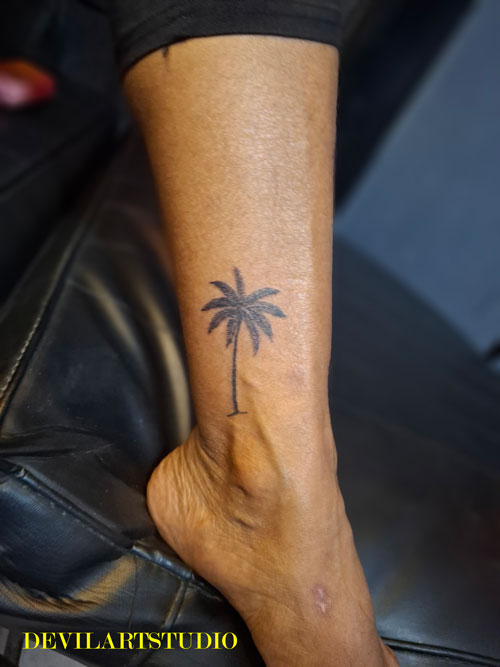
Creative palm tree tattoo design used as a scar cover up solution in Lahore

A scar doesn’t have to be a permanent reminder of a difficult moment. With a well-designed scar cover up tattoo, our Lahore studio helps clients transform scars from surgery, accidents, or skin conditions into meaningful, beautiful artwork.

What is a Scar Cover Up Tattoo

A scar cover up tattoo uses strategic linework, shading, and color to camouflage or artistically incorporate a scar into a new design. Instead of hiding the area, the scar becomes part of a piece you’ll be proud to show.

Is Your Scar Suitable for Cover Up

Most fully healed, flat, and stable scars are good candidates for tattooing. Our artists assess texture, color, and age of the scar during a free consultation to recommend the safest and most effective design approach.

The Design Process We Follow

We start with a detailed consultation to understand your scar’s history and your design preferences. From there, our artists create a custom layout that works with the scar’s shape rather than against it, ensuring natural, seamless results.

Aftercare for Scar Cover Up Tattoos

Because scar tissue can heal differently than regular skin, we provide tailored aftercare instructions to protect your new tattoo and support proper healing, helping your cover up look its best for years to come.