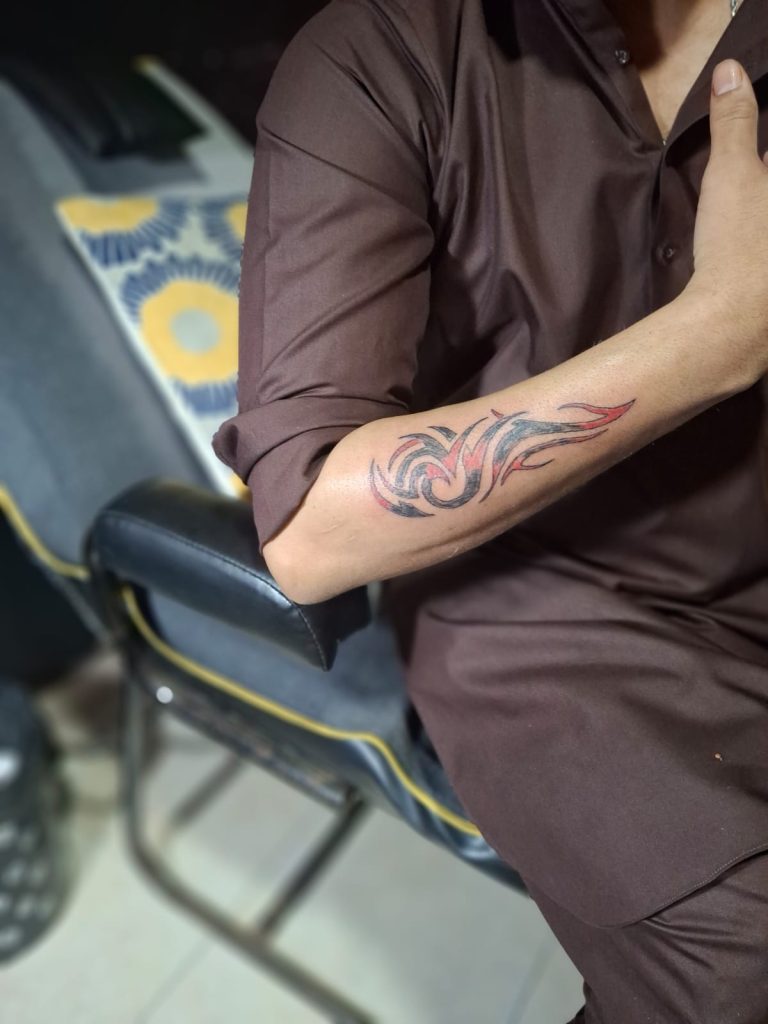
Polynesian tattooing is one of the oldest and most symbolically rich tattoo traditions in the world, and demand for a genuine Polynesian tattoo in Lahore has grown steadily as more people discover the style through travel, social media, and international tattoo culture. At Devil Tattoo Lahore in Y Block, DHA Phase 7, we specialize in custom Polynesian and tribal work built with the same respect for pattern and symbolism that defines the tradition.
Unlike generic tribal designs pulled from a flash sheet, authentic Polynesian tattooing is built from a vocabulary of symbols — waves, shark teeth, turtle shells, spearheads, and more — each carrying specific meaning. Our approach is to understand what you want to represent and build a composition around those elements, rather than applying a one-size-fits-all pattern.
Interest in Polynesian tattoo art has grown steadily in Lahore over the past few years, partly through international travel and partly through social media exposure to artists specializing in the style. What sets a genuinely well-executed piece apart from a generic tribal pattern is intention — every curve and section should serve the overall composition rather than being filled in arbitrarily.
What Defines Polynesian Tattoo Art
- Bold, flowing linework that wraps naturally around the arm, leg, or torso.
- Symbolic patterns representing strength, family, protection, journey, and nature.
- High contrast blackwork combining solid fill with intricate detail sections.
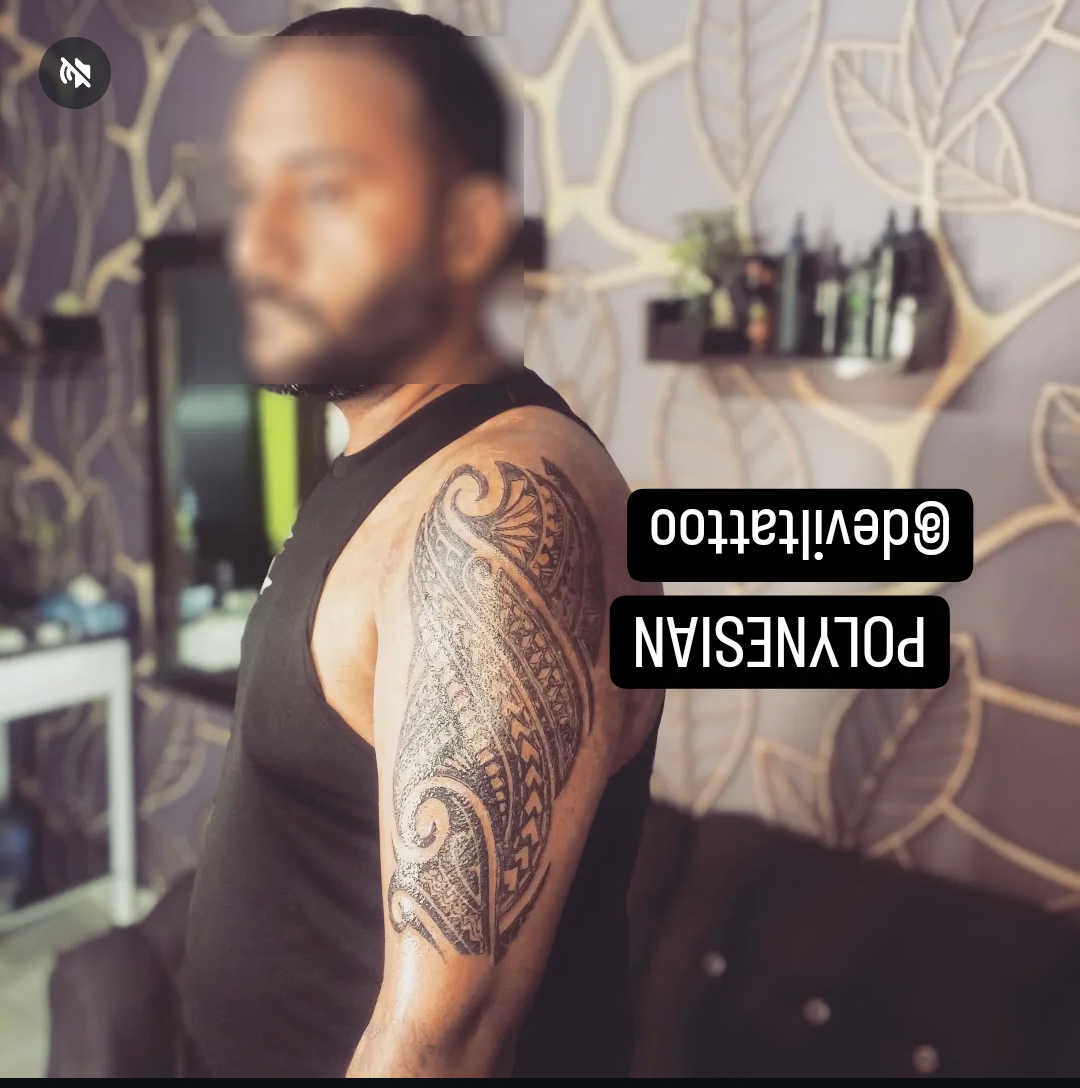
- Composition built for the body — designs are mapped to follow muscle lines and natural body flow rather than sitting as a flat, static image.
Custom Polynesian Sleeves and Placements
Most clients requesting Polynesian tattoos in Lahore are looking for sleeve work — full or half sleeves that wrap the forearm or upper arm with continuous, flowing patterns. We also design smaller adaptations for calves, shoulders, and back panels for clients who want the aesthetic without committing to a full sleeve. Every design starts as a custom layout mapped directly onto your body’s proportions.
The Meaning Behind the Patterns
Before starting any Polynesian-inspired design, we talk through what you want the piece to represent. Do you want to emphasize family and heritage, strength and resilience, or a personal journey? These themes translate into specific pattern choices — certain motifs for protection, others for growth or transition — so your finished tattoo carries genuine intention rather than being a purely decorative pattern.
Pairing Polynesian Work with Your Existing Tattoos
If you already have other tattoos and are considering adding Polynesian-style work, we take time during the consultation to plan how the new piece will interact with existing ink — whether that means connecting them into one larger composition or keeping them intentionally separate. This kind of planning prevents your tattoo collection from feeling disjointed and ensures each new piece adds to the overall look rather than competing with what’s already there.
Why Technical Skill Matters for This Style
Polynesian tattooing relies heavily on bold, consistent linework and clean solid black fill, both of which are unforgiving of shaky technique or inconsistent needle depth. Our artists’ experience with tribal and blackwork tattooing ensures the solid sections stay crisp and the fine connecting lines remain sharp, both of which are essential for the design to age well over the years.
A Process Built Around Careful Planning
Because Polynesian sleeve work often spans multiple sessions, we plan the full composition upfront — even if we’re tattooing it in stages — so the final result feels cohesive rather than like separate pieces stitched together. This planning happens during your initial WhatsApp consultation and in-studio design review before your first session begins.
Hygiene for Larger, Multi-Session Work
Sleeve and large-scale Polynesian pieces often require more than one appointment. Regardless of session length, every visit follows the same hygiene protocol — sterile single-use needles, sanitized equipment, and disinfected surfaces — ensuring consistent safety across the entire project timeline.
Polynesian tattoo art carries centuries of tradition and meaning, and we approach every piece with respect for that history while adapting it thoughtfully to fit your body and story. It’s a style that rewards patience and planning, and we’re happy to guide you through every step of that process.
Frequently Asked Questions
Do the patterns have specific meanings?
Yes, Polynesian tattoo symbols represent themes like strength, family, protection, and journey. We discuss what you want to represent before finalizing your design layout.
Is a Polynesian sleeve done in one session?
Larger sleeve work is often completed across multiple sessions. We plan the full composition upfront so the final result feels cohesive across each stage of the project.
Can the style be adapted to a smaller placement?
Yes, we design smaller adaptations for calves, shoulders, or back panels for clients who want the aesthetic without committing to a full sleeve.
What makes Polynesian tattoos age well?
Bold, consistent linework and solid black fill, done with careful needle depth and technique, keep the pattern crisp and clean as it heals and ages over time.
Do you tattoo authentic tribal symbols or only decorative patterns?
We can incorporate authentic symbolic elements based on the meaning you want to convey, blended with a composition that suits your body and personal style.
How painful is a Polynesian sleeve compared to other styles?
Because of the solid black fill sections, it can be more intense than fine line work, but sessions are paced to keep you comfortable throughout.
Start Your Polynesian Tattoo Journey
If you’re drawn to the bold linework and deep symbolism of Polynesian tattoo art, message Devil Tattoo Lahore on WhatsApp to begin planning your custom piece. We’re located at Y Block, DHA Phase 7, open Monday to Saturday, 12:00 PM to 10:00 PM, by appointment only.
Ready to book your appointment at Devil Tattoo Lahore?
📱 Chat with Us on WhatsApp: 0333-2999499