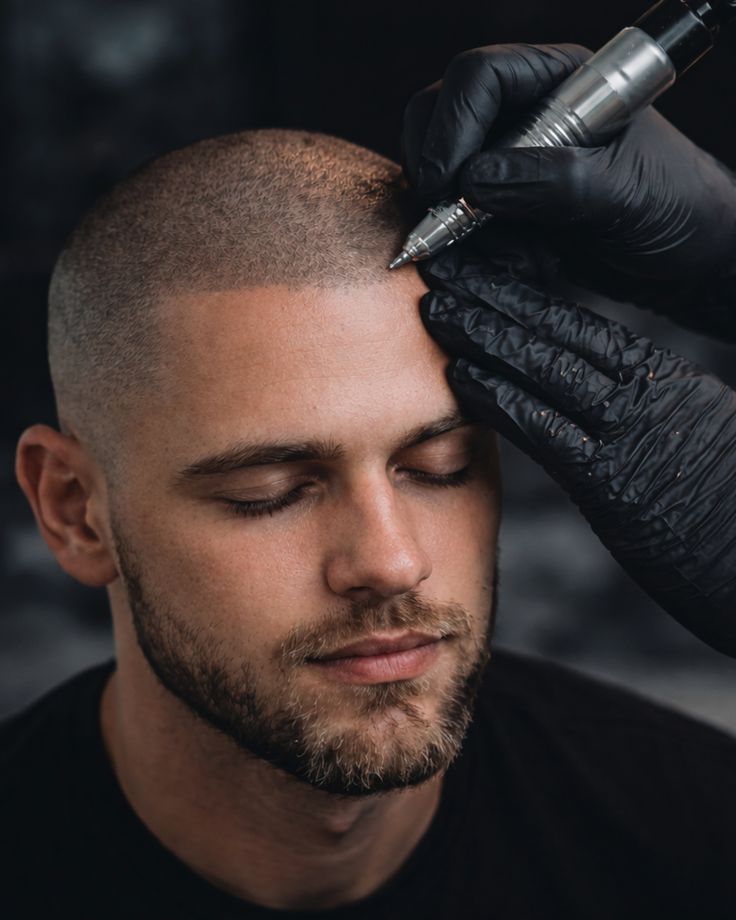
Scalp micropigmentation, or SMP, is a technique that deposits tiny dots of pigment into the scalp to mimic the look of a closely shaved head, hairline, or added density between thinning hair. It’s one of the most requested paramedical services at Devil Art Studio, and it works for a wide range of hair loss patterns. Here’s how it actually works.
What SMP Is Used For
SMP is commonly used for pattern baldness, general thinning, alopecia patches, and creating the look of a fuller hairline. Unlike a hair transplant, it doesn’t add real hair, it uses layered dots of pigment to create the visual illusion of hair follicles or a shaved head, which reads as natural at normal viewing distance.
How the Technique Works
SMP relies on the same precise, controlled pigment implantation used across our paramedical work, but with a specialized needle configuration designed to create tiny, follicle-sized dots rather than solid lines or shading. The artist works in layers, building up density gradually and varying dot size and pigment tone so the result doesn’t look flat or uniform, real hair follicles aren’t perfectly even, and neither should the pigment pattern be.

SMP vs. FUE Scar Camouflage
SMP covers a broad area to create the look of density or a shaved head, while FUE scar camouflage is a more targeted treatment aimed only at hiding donor-site scarring from a hair transplant. Some clients actually combine both: SMP across the scalp and targeted work over any visible transplant scarring.
What a Session Looks Like
A full SMP treatment is usually done over two to four sessions, spaced a week or more apart. Each pass adds density and refines the pattern, and later sessions let us adjust based on how the pigment has healed. We work with your natural hairline and head shape rather than a generic template, so the result looks like it belongs on you specifically.
Aftercare and Longevity
Healing follows similar principles to standard tattoo aftercare, keeping the area clean, avoiding sun exposure, and not picking at any flaking during the first couple of weeks. SMP pigment fades gradually over several years since it’s implanted more superficially than a traditional tattoo, and most clients come back for a light refresh session periodically to keep the density looking sharp.
Is SMP Safe?
We use single-use needles and sterile technique for every session, the same standards covered in our guide to tattoo safety in Lahore. A consultation beforehand lets us check your scalp condition and confirm SMP is the right fit before any pigment goes in.
Related Paramedical Services
Alongside SMP, we offer paramedical scar camouflage, vitiligo camouflage, and areola tattoo and nipple reconstruction. Book a consultation and we’ll map out a plan based on your hair loss pattern and goals.