Best Breast Cancer Areola Tattoo in Lahore | A Guide to Medical Tattoo Reconstruction

Breast cancer survivors who have undergone mastectomy and reconstruction often reach a point in their recovery journey where they want to complete the process with a natural-looking areola. A breast cancer areola tattoo, also called 3D areola pigmentation, is a specialised paramedical service designed specifically for this stage of recovery. This guide walks through what medical tattoo reconstruction involves, how it fits into the wider recovery timeline, and how to choose the right specialist in Lahore.

Why Many Survivors Choose Areola Tattooing

For many women, losing the nipple-areola complex during mastectomy is one of the more emotionally difficult parts of breast cancer treatment, even after reconstruction restores the breast’s shape. Areola tattooing offers a way to visually complete the reconstruction without additional surgery, and many survivors describe it as an important, positive milestone that helps them feel more like themselves again. It is a personal decision, and there is no right timeline for choosing it.

Where This Fits in the Recovery Journey

Areola tattooing is typically one of the final steps after mastectomy, reconstruction surgery, and any additional treatments such as chemotherapy or radiotherapy are complete and the breast tissue has fully healed. Your oncology and surgical team should confirm you are medically ready before booking a cosmetic pigmentation session, since healing time varies significantly between patients and reconstruction methods. There is no obligation to rush this step, and some women choose to wait months or longer after reconstruction before pursuing it.

How the Tattooing Process Works

The process uses 3D shading techniques to recreate the appearance of a natural nipple and areola using custom-matched pigment, building the illusion of depth and dimension even on flat reconstructed skin. A consultation maps the desired size, position, and colour, often referencing the natural side if only one breast was affected. Most clients need an initial session followed by a touch-up 6 to 8 weeks later, since colour typically softens as pigment heals and settles into the skin.

Choosing the Right Specialist

Not every tattoo artist is trained in areola restoration, so it is worth specifically asking about a studio’s paramedical experience with post-mastectomy clients, their approach to hygiene for reconstructed and potentially radiated skin, and whether they can show examples of their previous areola work. A good specialist will also be comfortable discussing your surgical history and will not rush the consultation, since precision and symmetry matter enormously in this type of work.

What to Expect Emotionally and Physically

Many clients describe the appointment itself as a meaningful, sometimes emotional experience rather than a routine cosmetic procedure, and a good studio will create a private, respectful environment for this. Physically, reconstructed skin often has reduced sensation due to nerve changes from surgery, which many clients find makes the tattooing process more comfortable than expected.

Safety Standards for Post-Mastectomy Clients

Because reconstructed and sometimes radiated skin can behave differently from typical skin, hygiene and technique are especially important. Devil Art Studio uses single-use sterile needles and medical-grade pigments, and we ask about your full surgical and treatment history, including any radiotherapy, so we can plan your session appropriately and safely.

Why Choose Devil Art Studio

Devil Art Studio in Y Block, DHA Phase 7, Lahore treats breast cancer areola tattooing as a specialised, deeply personal service. We take the time to understand each client’s surgical history and expectations, and we prioritise a calm, private, and dignified experience over a rushed appointment.

Frequently Asked Questions

How soon after reconstruction can I get areola tattooing? This depends on your individual healing and any additional treatments; your surgical team can confirm when you are ready.

Does insurance or a hospital ever cover this? Coverage varies and is worth discussing directly with your hospital or insurer, as this is outside what a tattoo studio can advise on.

Will it look natural? 3D shading techniques are specifically designed to create a realistic, dimensional appearance, though results vary based on skin and healing.

Is the procedure painful? Most clients report reduced sensation in reconstructed tissue, making the process more comfortable than a typical tattoo.

Book Your Consultation

If you are a breast cancer survivor considering areola tattoo reconstruction in Lahore, Devil Art Studio offers a private, judgement-free consultation to discuss your journey and options. Message us on WhatsApp at 0333-2999499, or visit our Instagram @devilartstudiolahore to learn more about our paramedical services.

#BreastCancerAwareness #AreolaRestorationLahore #DevilArtStudio #MedicalTattooReconstruction #ParamedicalTattooLahore
Best Areola Restoration Tattoo in Lahore | 3D Nipple & Breast Reconstruction

For women who have undergone a mastectomy or breast reconstruction, restoring a natural-looking areola can be an important final step in feeling complete again. Areola restoration tattoo treatments use specialised 3D pigmentation techniques to recreate the appearance of a natural nipple-areola complex on reconstructed breast tissue. This guide explains how the process works in Lahore, who it is suitable for, and what to expect from consultation through to healing.

What Is 3D Areola Restoration Tattooing?

3D areola restoration is a paramedical tattooing technique that uses shading, highlights, and custom-matched pigment to create the visual illusion of a natural nipple-areola complex on skin that has been reconstructed after mastectomy. Rather than a flat circle of colour, the artist builds depth using light and shadow, mimicking the way a real areola and nipple catch light, so the result appears three-dimensional even on flat, reconstructed skin.

Who Is This Treatment For?

Areola restoration is most commonly sought by women recovering from mastectomy with or without surgical nipple reconstruction, women whose reconstructed areola has faded or lost definition over time, and those who prefer a non-surgical option to a raised nipple reconstruction. Every client’s anatomy, scarring, and skin healing is different, so treatment plans are never one-size-fits-all. We recommend clients be fully healed from any reconstructive surgery and cleared by their surgeon before booking a pigmentation consultation.

How the Process Works

Treatment begins with a detailed consultation where the artist measures and maps the desired areola size, position, and colour based on the client’s natural anatomy where possible, or aesthetic preference where both sides have been reconstructed. Pigments are custom-mixed to match realistic areola tones, and shading is used to create the illusion of a raised nipple even on flat skin. Most clients need an initial full session followed by a touch-up around 6 to 8 weeks later once healing and colour settling are complete, since pigment often appears different once fully healed than immediately after application.

Timing After Surgery

Areola restoration is generally performed only after breast reconstruction has fully healed, which your surgeon will confirm, typically at least three to six months after your final reconstructive surgery, though this varies by individual healing and any additional treatments such as radiotherapy. Attempting pigmentation too early can affect how well the skin holds colour and how the area heals, so we always ask for surgical clearance before scheduling treatment.

Hygiene & Safety Standards

Reconstructed skin can be more sensitive and may have altered sensation or blood supply compared to natural breast tissue, so hygiene and technique matter enormously here. Devil Art Studio uses single-use sterile needles and medical-grade pigments for every areola restoration client, and we ask for relevant medical history, including any radiotherapy, before treatment to plan accordingly.

What Happens During Your Consultation

Your consultation includes a private, respectful assessment of the area, a discussion of your surgical history and healing timeline, and a conversation about your desired size, shape, and colour. Photos are taken before treatment to plan symmetry, particularly for clients being pigmented on one side to match a natural areola on the other. You will leave with a clear understanding of the number of sessions expected and aftercare instructions.

Why Choose Devil Art Studio

Devil Art Studio in Y Block, DHA Phase 7, Lahore treats areola restoration as one of the most delicate and meaningful services we offer. Our approach prioritises patience, symmetry, and realistic results over rushed sessions, and every client is treated with the privacy and sensitivity this procedure deserves.

Frequently Asked Questions

Is areola restoration painful? Reconstructed skin often has reduced sensation, so most clients report the procedure as more comfortable than a typical tattoo.

How long does the result last? Results are long-lasting but pigment can soften gradually over years, and occasional touch-ups help maintain definition.

Can both sides be matched if only one breast was reconstructed? Yes, artists can custom-mix pigment to closely match your natural areola for a more symmetrical appearance.

Do I need surgical clearance first? Yes, we recommend confirming with your surgeon that your reconstructed skin has fully healed before booking a pigmentation session.

Book Your Consultation

If you are considering areola restoration tattooing in Lahore, Devil Art Studio offers a private, confidential consultation to discuss your case with care. Message us on WhatsApp at 0333-2999499 to book a consultation, or visit our Instagram @devilartstudiolahore to learn more about our paramedical work.

#AreolaRestorationLahore #ParamedicalTattooLahore #DevilArtStudio #BreastReconstruction #3DAreolaTattoo

Best Vitiligo Camouflage Tattoo in Lahore | Natural-Looking Skin Repigmentation

Vitiligo causes patches of skin to lose their natural pigment, and while it is a medical condition best managed with a dermatologist, many people in Lahore also look for a cosmetic option to reduce the visual contrast of their patches day to day. This is where vitiligo camouflage tattoo treatments come in. Using paramedical micropigmentation, an artist deposits pigment into depigmented skin to visually blend it with the surrounding tone. This guide explains how the treatment works, who it may suit, and what it cannot do.

What Is Vitiligo Camouflage Tattooing?

Vitiligo camouflage, sometimes called micropigmentation for vitiligo, involves implanting custom-mixed pigment into depigmented patches of skin so they visually match the surrounding, unaffected skin tone. It is a cosmetic technique, not a medical treatment for vitiligo itself, and does not stop the condition from spreading or address its underlying autoimmune cause. It simply aims to reduce the visible contrast between affected and unaffected areas for people who want that option.

Is Vitiligo Camouflage Right for You?

This treatment tends to work best for vitiligo that has been medically confirmed as stable, meaning it has not spread or changed for at least a year, since pigment applied near active or spreading patches can end up mismatched as the condition progresses. It is generally not recommended for actively progressing vitiligo, and we always encourage clients to be under the care of a dermatologist first. A consultation will include honest questions about your diagnosis and stability before any treatment is agreed.

How the Treatment Works

The process begins with a detailed skin assessment and pigment matching, since vitiligo patches often need several custom pigment blends to account for slight variations in surrounding skin tone. Treatment is applied in multiple thin layers over more than one session, allowing the artist to build colour gradually and assess how your skin holds the pigment before committing further. Most clients require an initial session followed by one or more touch-ups spaced 6 to 8 weeks apart.

What Vitiligo Camouflage Cannot Do

It is important to understand the limits of this treatment. It cannot cure vitiligo, stop new patches from forming, or guarantee a permanent, exact colour match, since skin tone naturally shifts with the seasons and sun exposure while tattoo pigment does not tan. Camouflage tends to work more predictably on stable, well-defined patches than on widespread or actively changing vitiligo. Anyone considering this treatment should discuss it with a dermatologist first to confirm their vitiligo is stable and suitable for cosmetic pigmentation.

Safety Considerations

Because vitiligo-affected skin can behave differently to typical skin, including a phenomenon called koebnerization where new patches can form at sites of skin trauma, an experienced artist will discuss this risk honestly rather than treating every case the same way. Devil Art Studio uses single-use sterile equipment and medical-grade pigments, and will ask about your dermatological history and any recent flare-ups before agreeing to proceed.

What Happens During a Consultation

Your consultation will include an examination of your patches in natural light, a discussion of how long they have been stable, and realistic expectations about how closely the pigment can match your skin tone. Photos are taken to track colour changes over subsequent sessions. If your vitiligo appears active or recently changed, we may recommend waiting and following up with your dermatologist before beginning cosmetic treatment.

Why Choose Devil Art Studio

Devil Art Studio in Y Block, DHA Phase 7, Lahore approaches vitiligo camouflage as a specialised paramedical service requiring patience and precise colour work, not a quick fix. We are upfront when a case is not a good candidate for treatment, and we prioritise honest expectations over guaranteed before-and-after promises.

Frequently Asked Questions

Does vitiligo camouflage stop the condition from spreading? No. It is a cosmetic technique only and does not affect the underlying autoimmune process. Please continue any treatment plan recommended by your dermatologist.

Will the colour match perfectly forever? Skin tone changes naturally with sun exposure while pigment does not, so periodic touch-ups help maintain a close match over time.

Is it painful? Most clients report mild discomfort similar to light tattooing, and numbing options are available.

How many sessions are needed? This varies by patch size and skin response, but most clients need an initial session plus at least one touch-up.

Book Your Consultation

If your vitiligo has been confirmed stable and you are considering cosmetic camouflage in Lahore, Devil Art Studio offers a confidential consultation to assess whether treatment is appropriate for you. Message us on WhatsApp at 0333-2999499 to discuss your case, or visit our Instagram @devilartstudiolahore for more information.

#VitiligoCamouflageLahore #ParamedicalTattooLahore #DevilArtStudio #SkinRepigmentation #MedicalTattooingLahore

Best Scar Camouflage Tattoo in Lahore | Hide Surgical, Accident & Injury Scars

Scars from surgery, accidents, or injuries can affect confidence long after the wound itself has healed, which is why more people in Lahore are searching for scar camouflage tattoo treatments rather than relying on makeup or clothing to hide a mark permanently. Scar camouflage uses paramedical tattooing techniques to blend a scar into the surrounding skin tone, making it far less noticeable without surgery. This guide explains how the treatment works, which scars respond best, and what to expect from a consultation in Lahore.

What Is Scar Camouflage Tattooing?

Scar camouflage tattooing is a paramedical technique that deposits custom-mixed pigment into scar tissue to match it with the surrounding skin. Unlike a decorative tattoo, the goal is invisibility rather than art. The artist studies your natural skin undertone, then layers pigment in thin passes so the scar’s texture and colour blend into the surrounding area instead of standing out. It is not a treatment that removes a scar physically, but one that visually minimises its contrast with your skin.

Which Types of Scars Can Be Camouflaged?

Scar camouflage generally works best on flat, mature scars that are pale, pink, or white in colour, including surgical scars, C-section scars, appendectomy marks, old injury or accident scars, and some burn scars once fully healed. Scars that are still red, raised, actively healing, or less than 9 to 12 months old are usually not suitable yet, since the skin needs time to settle before pigment can be reliably matched and retained. A qualified artist will assess your specific scar rather than promising results for every scar type.

The Treatment Process Step by Step

Treatment begins with a consultation where the artist examines your scar in natural light, checks its texture and age, and discusses your skin tone and expectations. A patch test is often done first to confirm how your skin holds pigment. The main session involves multiple thin passes of custom-mixed pigment rather than one heavy application, since layering produces a more natural, gradual match. Most clients need one initial session plus a touch-up appointment around 6 to 8 weeks later once the pigment has settled and healed.

Who Is a Good Candidate?

Good candidates typically have a flat, fully healed scar, realistic expectations about the degree of improvement, and no active skin conditions or infections in the treatment area. Scar camouflage tends to work best for people whose scar contrasts strongly in colour with the surrounding skin rather than scars that are primarily raised or indented, since pigment addresses colour mismatch rather than texture. During your consultation, the artist will tell you honestly whether your scar is likely to respond well.

Limitations — What Scar Camouflage Cannot Do

It is important to have realistic expectations. Scar camouflage cannot completely erase a scar, remove raised or indented texture, or guarantee an identical match in every lighting condition, since skin tone can shift slightly with sun exposure and seasons. It is a cosmetic camouflage technique, not a medical scar-removal procedure, and results are typically most convincing at normal viewing distance rather than under close inspection. A responsible studio will explain these limitations clearly before treatment rather than overpromising.

Safety & Hygiene Standards

Because scar tissue can be more sensitive than regular skin, hygiene standards matter even more here. Look for single-use sterile needles, medical-grade disposable equipment, and an artist who screens for contraindications such as keloid tendency, active infection, or pigment allergies before treatment. Devil Art Studio follows strict sanitation protocols for every paramedical client and will not proceed with treatment if a scar appears unsuitable or unhealed.

Why Choose Devil Art Studio

Devil Art Studio in Y Block, DHA Phase 7, Lahore has a dedicated paramedical practice separate from our standard tattoo and piercing services. Our artists combine tattooing precision with colour-matching experience across a wide range of skin tones, and we assess every scar individually rather than applying a one-size-fits-all approach.

Frequently Asked Questions

Is scar camouflage permanent? Results are long-lasting but pigment can fade gradually over years, and occasional touch-ups help maintain the match.

Does it hurt? Most clients find it more tolerable than a traditional tattoo since scar tissue often has reduced sensitivity, though numbing cream is available if needed.

How soon after surgery can I get scar camouflage? Most artists recommend waiting at least 9 to 12 months after surgery so the scar is fully mature before treatment.

What does it cost in Lahore? Pricing depends on the scar’s size, location, and number of sessions needed, so we recommend a consultation for an accurate quote.

Book Your Consultation

If you are looking for a trusted scar camouflage tattoo studio in Lahore, Devil Art Studio offers confidential consultations to assess whether your scar is a good candidate for treatment. Message us on WhatsApp at 0333-2999499 to check availability, or visit our Instagram @devilartstudiolahore to see real client results.

#ScarCamouflageLahore #ParamedicalTattooLahore #DevilArtStudio #SurgicalScarCamouflage #MedicalTattooingLahore

Best Paramedical Tattoo Studio in Lahore | Advanced Scar & Skin Camouflage Guide

Paramedical tattooing has quietly become one of the most in-demand services in Lahore, as more people search for a genuine paramedical tattoo studio in Lahore rather than a standard tattoo parlour offering camouflage work as an afterthought. The difference between the two is significant: one is trained specifically in medical-grade pigmentation, colour correction, and skin healing, while the other simply applies decorative ink. This guide explains what separates an advanced paramedical studio from a regular tattoo shop, the techniques involved, and what you should expect when you book a consultation.

What Makes a Studio “Paramedical” Rather Than Just a Tattoo Shop?

A true paramedical tattoo studio is built around a completely different skill set than traditional tattoo art. Instead of bold linework and saturated colour, the goal is subtlety, blending, and precision that mimics natural skin tone. Artists working in this field undergo dedicated paramedical training covering colour theory for skin undertones, scar tissue behaviour, pigment healing, and contraindication screening. At Devil Art Studio, our paramedical services are treated as a distinct discipline from our tattoo and piercing work, with separate consultation processes and equipment protocols.

Advanced Scar & Skin Camouflage Techniques We Use

Modern paramedical tattooing relies on several specialised techniques rather than a single approach. Micropigmentation deposits fine layers of custom-mixed pigment into scar tissue to match surrounding skin tone. Needling and micro-needling techniques can also improve the texture of raised or indented scars over multiple sessions. For lighter or hypopigmented scars, multiple thin passes are usually preferred over a single heavy application, since this produces a more natural, gradual result and reduces the risk of over-correction. The right technique depends entirely on the scar’s age, depth, texture, and location.

Common Concerns Treated at a Paramedical Studio

Clients visit paramedical studios in Lahore for a wide range of reasons. These include surgical scars from operations or C-sections, accident and burn scars, stretch marks, vitiligo patches, areola and breast reconstruction after mastectomy, FUE hair transplant donor scars, and cosmetic enhancements such as brow or lip pigmentation. Each of these is technically distinct, which is why an advanced studio will ask detailed questions about your medical history and the origin of the area you want treated before recommending a treatment plan.

Hygiene, Training & Safety Standards to Look For

Because paramedical clients often have healing, sensitive, or previously injured skin, hygiene expectations should be higher than at a standard tattoo studio. Look for single-use sterile needles, medical-grade disposable equipment, visible sanitation practices, and a studio willing to discuss its artist’s specific paramedical qualifications rather than only general tattooing experience. A responsible studio will also screen for contraindications such as active infections, unhealed wounds, keloid tendencies, or pigment allergies before agreeing to treat you, and will be upfront if a particular case needs a dermatologist’s input first.

What Happens During Your First Consultation

A proper consultation is not a quick chat, it is an assessment. The artist examines the area in natural light, discusses your goals and medical history, and explains realistic expectations, since paramedical results are gradual and often require more than one session. Photos are usually taken before treatment to track colour changes and healing over time. You should leave the consultation with a clear understanding of how many sessions your case is likely to need, approximate spacing between sessions, and aftercare instructions specific to your skin.

Why Devil Art Studio Is a Trusted Paramedical Tattoo Studio in Lahore

Devil Art Studio has built a dedicated paramedical practice in Y Block, DHA Phase 7, Lahore, separate from our general tattoo and piercing services. Our approach combines technical tattooing precision with an understanding of skin recovery, colour science, and realistic client communication. We do not promise results a technique cannot deliver, and every treatment plan is built around your specific skin, scar, or concern rather than a one-size-fits-all package.

Frequently Asked Questions

Is paramedical tattooing painful? Most clients report less discomfort than traditional tattooing, since many techniques use shallow passes, and topical numbing is available for sensitive areas.

How many sessions will I need? This depends on the treatment, but most paramedical work involves an initial session plus a touch-up around 6 to 8 weeks later once healing and colour settling are complete.

Can paramedical tattooing be done on any skin tone? Yes. Pigments are custom-mixed for each client, and an experienced artist will test and adjust the shade before committing to a full application.

How much does treatment cost? Pricing depends on the treatment type, size of the area, and number of sessions required. We recommend booking a consultation for an accurate quote rather than comparing generic price lists, since two clients with the same concern can need very different treatment plans.

Book Your Consultation

If you are searching for a genuine paramedical tattoo studio in Lahore for scar camouflage, vitiligo, stretch marks, or reconstructive tattooing, Devil Art Studio offers confidential, one-on-one consultations tailored to your skin. Message us on WhatsApp at 0333-2999499 to discuss your case and check availability, or visit our Instagram @devilartstudiolahore to see real client results.

#ParamedicalTattooLahore #ScarCamouflage #DevilArtStudio #MedicalTattooingLahore #SkinCamouflageLahore

Beard Tattoo in Lahore: Fixing Patchy Beards with Beard Micropigmentation

A patchy or thin beard can be a source of frustration for many men, and one of the most effective non-surgical solutions is a beard tattoo, also known as beard micropigmentation. Using the same precision technique behind scalp micropigmentation, this treatment fills in sparse areas of facial hair to create the appearance of a fuller, denser beard. Here is what to know about getting a beard tattoo in Lahore.

What Is a Beard Tattoo?

A beard tattoo involves depositing tiny dots of pigment into the skin to mimic the look of individual beard hair follicles. Rather than a solid block of color, the technique layers small, natural-looking dots that blend with your existing facial hair, filling in gaps and creating a more even, fuller appearance. Done well, the result looks like natural stubble or density rather than an obvious tattoo.

Who Can Benefit From a Beard Tattoo?

This treatment works well for men dealing with patchy beard growth, uneven density along the cheeks or jawline, or scarring that disrupts natural hair growth in certain areas. It is also a popular option for men who want a fuller-looking beard without waiting months or years for natural growth to fill in on its own, or who have areas that simply will not grow hair evenly no matter how long they wait.

The Process: What Happens During a Session

Your session begins with a consultation to map out your natural beard pattern, discuss density goals, and match pigment to your hair color. The artist then builds up small dots layer by layer, following the direction of your natural hair growth to keep the result looking authentic rather than artificial. Most clients need two to three sessions spaced a few weeks apart to reach their desired density, since the skin needs time to heal and the pigment needs to settle between visits.

How Long Does It Last?

A well-done beard tattoo typically lasts a few years before needing a touch-up, though this varies based on skin type and sun exposure. Because the fading happens gradually, most clients simply schedule a light refresh every couple of years rather than a full redo.

Beard Tattoo vs Beard Transplant

Unlike a beard transplant, which involves surgically relocating hair follicles and requires significant downtime, a beard tattoo is a purely cosmetic technique with no surgery involved. It is faster, more affordable, and requires no recovery period, though it will not produce new, growing hair the way a transplant does. For many clients, a beard tattoo is an appealing alternative simply because of how quickly it delivers a fuller-looking result.

Aftercare for Beard Micropigmentation

Proper aftercare helps the pigment settle cleanly and last as long as possible. Avoid excessive sweating, direct sun exposure, and harsh cleansers on the treated area for the first week or two. Keeping the skin moisturized as directed by your artist and avoiding shaving too closely over freshly treated areas during the healing period will help preserve the detail of the work.

Why Choose Devil Art Studio

Beard micropigmentation demands the same precision and color-matching skill as our detailed realism tattoo work, ensuring the dots blend naturally with your real facial hair rather than looking flat or artificial. You can view examples of our precision work in our portfolio before booking a consultation.

Frequently Asked Questions

Does a beard tattoo hurt? Most clients describe the sensation as mild discomfort rather than significant pain, since the treatment works at a shallow depth in the skin.

Will it look like a real beard? When done by an experienced artist, the dots are layered to follow your natural growth pattern, making the result look authentic even up close.

Can it fix uneven patches without covering my whole beard? Yes, beard micropigmentation can be targeted specifically at patchy areas rather than the entire beard.

Final Thoughts

A beard tattoo offers a fast, non-surgical way to achieve a fuller, more even beard for men dealing with patchy growth. With the right artist and proper aftercare, the results can look natural for years. If you are considering a beard tattoo in Lahore, contact our studio to book a consultation.

Hair Tattoo in Lahore: Scalp Micropigmentation Explained

Hair loss affects confidence more than most people admit, and one of the biggest breakthroughs in the tattoo world has been the rise of the hair tattoo, also known as scalp micropigmentation. If you have been researching a hair tattoo in Lahore, this guide explains exactly what the treatment involves, who it works best for, and what to expect before booking a session.

What Is a Hair Tattoo (Scalp Micropigmentation)?

A hair tattoo, or scalp micropigmentation, is a specialized technique where tiny dots of pigment are deposited into the scalp to replicate the appearance of hair follicles. Unlike a traditional tattoo that uses solid lines and shading, this technique relies on thousands of microscopic impressions layered carefully to mimic the natural, slightly irregular pattern of real hair growth. The result is an illusion of a fuller head of hair or a closely shaved buzz-cut look, depending on what the client wants to achieve.

Who Can Benefit From a Hair Tattoo?

This treatment is popular among men and women dealing with a receding hairline, thinning crown, patchy hair loss, or scarring from previous hair transplants. It is also a practical option for people who simply prefer a clean, shaved-head aesthetic but want the scalp to appear denser and more even in tone. Because the technique is non-surgical, it appeals to clients who want a quick, low-maintenance solution rather than committing to ongoing medical treatments.

The Process: What Happens During a Session

Every hair tattoo session begins with a consultation to map out the hairline, discuss the desired density, and match pigment to the client’s natural hair color and skin tone. The artist then works in layers, building up the illusion gradually rather than in a single pass, which allows for a more natural and blended result. Most clients need two to four sessions spaced a few weeks apart, since the scalp needs time to heal between visits and the pigment needs to settle to its true tone.

How Long Does It Last, and How Many Sessions Are Needed?

A well-executed hair tattoo typically lasts several years before a touch-up is needed, although this varies depending on skin type, sun exposure, and how the scalp ages over time. Most clients return for a light refresh every few years rather than a full redo, since the pigment fades gradually rather than disappearing all at once.

Hair Tattoo vs Hair Transplant

Unlike a hair transplant, a hair tattoo does not involve moving actual hair follicles or any surgical downtime. It is purely a cosmetic technique that creates the visual impression of density using pigment. This makes it faster, less expensive, and far less invasive than a transplant, though it will not produce real, growing hair. Many clients actually combine both approaches, using scalp micropigmentation to camouflage transplant scars or to add density between existing hair.

Aftercare for Scalp Micropigmentation

Proper aftercare is essential to how the final result settles. Clients are usually advised to avoid sweating heavily, swimming, or exposing the scalp to direct sun for the first week or two. Keeping the area clean and moisturized as directed, and avoiding harsh shampoos during the healing period, helps the pigment retain its shape and tone. Long-term, using sunscreen or a hat when out in strong sun helps the pigment last longer without premature fading.

Why Choose an Experienced Studio in Lahore

Because scalp micropigmentation depends entirely on precision, symmetry, and color-matching skill, choosing an artist with real experience in this specific technique matters far more than with a standard tattoo. At Devil Art Studio, our approach draws on the same detail-oriented technique used in our realism tattoo work, ensuring the final look blends naturally with your existing hair and skin tone. You can see examples of our precision work in our portfolio before booking a consultation.

Frequently Asked Questions

Does a hair tattoo hurt? Most clients describe the sensation as a mild, tolerable discomfort rather than significant pain, since the scalp is treated with fine needles at a shallow depth.

Will it look natural? When done by an experienced artist, the dots are layered and shaded to mimic real follicles, making the result look natural even up close.

Can it cover scars from a hair transplant? Yes, scalp micropigmentation is commonly used to camouflage transplant scarring by blending pigment into the surrounding area.

Is it suitable for women as well as men? Yes, women dealing with thinning hair or a widening part line often use scalp micropigmentation to create the illusion of denser hair along the scalp.

Final Thoughts

A hair tattoo offers a practical, non-surgical way to restore the appearance of density and confidence for people dealing with hair loss or thinning. With the right artist and proper aftercare, the results can look remarkably natural for years. If you are considering a hair tattoo in Lahore, reach out to our team to book a consultation and discuss your goals.

Cheek Beauty Marks & Facial Freckle Tattoos in Lahore: The Complete Guide

Beauty marks and light freckling have long been associated with a soft, youthful, effortlessly pretty look, and now more women in Lahore are choosing to recreate them semi-permanently rather than relying on makeup every day. Cheek tattoo Lahore services for beauty marks and facial freckles are a subtle form of cosmetic tattooing designed to look completely natural, not like an obvious tattoo.

What Are Cheek Beauty Mark and Freckle Tattoos?

These are extremely fine, small-scale cosmetic tattoos placed on the cheeks, nose bridge, or upper face to mimic natural beauty marks or a light scattering of freckles. Unlike body tattoos, they use tiny dot or micro-stroke techniques with soft, diluted pigments so the result looks like it belongs there naturally rather than sitting on top of the skin.

Why Women Choose This Treatment

Many clients want a low-maintenance way to enhance their natural features without applying makeup every morning. Others have lost natural beauty marks or freckles due to skin treatments, ageing, or laser procedures and want to restore that signature look. Some simply admire the trend and want a subtle, personalised addition to their face that feels uniquely theirs.

Designing a Natural-Looking Placement

Placement is the most important part of this treatment. The artist studies your bone structure, symmetry, and existing features to choose dot positions that look believable rather than random. Reference photos are often used, and a temporary marking is drawn on first so you can approve the exact placement before any pigment is applied. Most clients choose one to three beauty marks or a light freckle scatter across the nose and upper cheeks.

The Tattooing Process

Because the marks are so small, sessions are quick, typically 30 to 45 minutes. A fine needle deposits a small amount of pigment at a shallow depth, using a lighter hand than standard tattooing to avoid any raised or bold appearance. Numbing cream can be applied beforehand, though most clients describe the sensation as very mild given the tiny surface area involved.

Healing and Longevity

Expect slight redness for a few hours and very light scabbing over the following days. The pigment will appear slightly darker at first and settle into a soft, natural tone within two weeks. Facial cosmetic tattoos like these typically last 1 to 3 years, fading gradually rather than disappearing suddenly, and a quick touch-up can refresh the look whenever needed.

Is It Safe for Facial Skin?

Facial skin is more delicate than body skin, so hygiene and precision matter even more here. Devil Art Studio uses sterile, single-use needles and conducts a skin assessment before every session to rule out any allergies, active breakouts, or skin conditions that could affect healing. Clients with certain skin conditions may be advised to wait or consult a dermatologist first.

How This Fits Into Our Paramedical Tattoo Services

While cheek and freckle tattoos are cosmetic rather than corrective, they use many of the same precision techniques found across our broader paramedical tattoo Lahore services, from colour matching to shallow, controlled pigment application. Clients often combine this treatment with brow or lip cosmetic tattooing during the same visit for a complete, natural enhancement.

Who Should Avoid This Treatment

Clients who are pregnant or breastfeeding, have active acne or eczema flare-ups in the treatment area, or have a history of keloid scarring should postpone or avoid facial cosmetic tattooing until cleared by a doctor. Anyone with a known allergy to tattoo pigments should also disclose this during the consultation so alternative pigment options can be discussed. A thorough skin assessment before booking helps identify any of these concerns early.

How Many Sessions Are Needed

Most clients achieve their desired look in a single session, though a follow-up touch-up around six weeks later is recommended to perfect the shade once the skin has fully healed. Because the treated area is so small, sessions are quick and require minimal downtime, making it easy to fit into a lunch break or a day off work.

Frequently Asked Questions

Will it look like an obvious tattoo? No, when done correctly the marks blend naturally into your skin and are often mistaken for real beauty marks.

Can I choose the exact placement? Yes, placement is drawn on and approved by you before any pigment is applied.

Does it fade completely or leave a scar? It fades gradually over time without scarring when properly cared for during healing.

Can freckle tattoos be removed if I change my mind? Because the pigment is placed shallowly and in small amounts, it fades naturally faster than body tattoos, and options like laser fading exist if needed.

Book Your Consultation

If you love the look of natural beauty marks or soft freckles and want a low-maintenance way to enhance your face, Devil Art Studio offers a private consultation to discuss placement and design. Message us on WhatsApp at 0333 2999499 or visit our Instagram www.instagram.com/devilartstudiolahore to see examples of our facial cosmetic tattoo work.

#CheekTattooLahore #FreckleTattoo #BeautyMarkTattoo #CosmeticTattooLahore #DevilArtStudio #FacialTattooLahore #NaturalBeautyLahore

Cosmetic tattoo consultation for cheek beauty marks and freckle tattoos at Devil Art Studio Lahore

Paramedical Tattooing for Women in Lahore: Treatments Beyond Traditional Tattoos

Tattoo studios are no longer just about ink and art. Across Lahore, a growing number of women are turning to paramedical tattoo Lahore services for reasons that have nothing to do with decoration and everything to do with confidence, recovery, and restoring a sense of normalcy after surgery, scarring, or skin conditions. This guide explains what paramedical tattooing actually covers and how it differs from traditional tattoo art.

What Is Paramedical Tattooing?

Paramedical tattooing is a specialised field that uses tattooing techniques and medical-grade pigments to address skin concerns rather than create decorative designs. It requires a different skill set entirely, focused on colour theory, skin healing, and precision rather than bold artistic linework. Every treatment is tailored to the individual’s skin tone, scar texture, and medical history.

Treatments Beyond Traditional Tattoos

At Devil Art Studio, our paramedical services include several specialised treatments. Our 3D areola restoration service helps women recover a natural nipple-areola appearance after mastectomy or reconstruction, while our areola shade correction treatment focuses purely on evening out pigmentation for clients who already have natural areola shape. We also offer scar camouflage for surgical and injury scars, stretch mark camouflage, vitiligo camouflage, and cosmetic tattooing such as brow and lip enhancement. Each of these is a distinct discipline requiring its own training and pigment knowledge.

Who Seeks Paramedical Tattooing?

Our clients include women recovering from breast surgery, mothers with stretch marks or C-section scars, individuals living with vitiligo or hypopigmentation, burn and accident survivors with visible scarring, and women who simply want long-lasting, low-maintenance cosmetic enhancements like defined brows. The common thread is a desire to feel comfortable and confident in their own skin again.

How It Differs From Traditional Tattoo Art

Traditional tattoos are permanent works of art with bold lines and saturated colour, designed to be seen and admired. Paramedical tattooing is the opposite in intent: the goal is to look as natural and undetectable as possible. This requires far more subtlety, patience, and precision, since a mismatched shade or heavy hand can draw attention rather than disguise it. Artists working in this field need specific paramedical training beyond standard tattoo apprenticeship.

Hygiene and Safety Standards

Because many paramedical clients have healing or sensitive skin, hygiene standards are even more critical than in standard tattooing. Devil Art Studio uses single-use sterile needles, medical-grade disposable equipment, and thorough skin assessments before every treatment to check for contraindications such as active infections, unhealed wounds, or allergies to pigments.

What Happens During a Consultation

Every client begins with a private consultation to discuss their goals, medical history, and any relevant surgical or dermatological reports. The artist examines the skin in natural light, discusses realistic expectations, and creates a treatment plan that may involve one or several sessions depending on complexity. Photos of the area before treatment help track healing and colour changes over time.

Why Choose Devil Art Studio

Devil Art Studio has built a dedicated paramedical tattoo practice in Lahore specifically for women who need more than standard tattoo art. Our artists combine technical tattooing skill with an understanding of skin recovery and colour science. For general information on scar formation and skin healing, resources such as the American Academy of Dermatology provide useful background, though we always recommend a personal consultation for treatment-specific advice.

Frequently Asked Questions

Is paramedical tattooing painful? Most treatments are less painful than traditional tattoos since passes are shallow, and numbing cream is available where needed.

How many sessions are typically needed? This varies by treatment, but most paramedical services require an initial session plus one touch-up 6 to 8 weeks later.

Is it suitable for all skin tones? Yes, pigments are custom-mixed for every client regardless of skin tone.

How much does paramedical tattooing cost in Lahore? Pricing depends entirely on the treatment type, size of the area, and number of sessions required, so we recommend booking a consultation for an accurate quote rather than comparing generic price lists. Many clients also ask whether treatments can be combined; scar camouflage and stretch mark camouflage are often planned together for postpartum clients, while areola restoration and shade correction can be paired for reconstruction cases. Combining treatments in one overall plan is common and often more cost-effective than booking each service separately.

Book Your Consultation

Whether you are exploring scar camouflage, areola restoration, or cosmetic tattooing, Devil Art Studio offers confidential consultations tailored to your needs. Message us on WhatsApp at 0333 2999499 or visit our Instagram www.instagram.com/devilartstudiolahore to see real results from our paramedical clients.

#ParamedicalTattooLahore #MedicalTattooing #DevilArtStudio #WomenHealthLahore #ScarCamouflage #AreolaTattoo #CosmeticTattooLahore

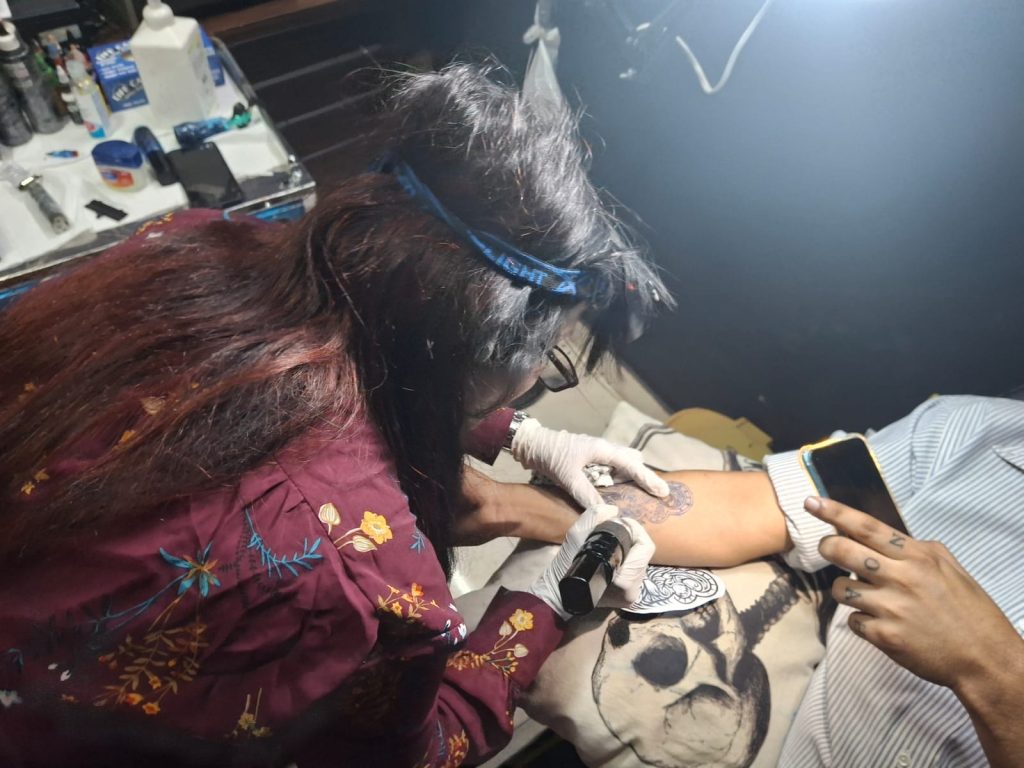
Paramedical tattoo artist working with a client at Devil Art Studio Lahore

Areola Shade Correction in Lahore: How Medical Tattooing Can Restore Natural-Looking Color

Not every areola needs full 3D reconstruction. Many women in Lahore simply notice that their natural areola colour has become patchy, too dark, too light, or unevenly toned after breastfeeding, hormonal changes, surgery, or skin conditions. Areola shade correction Lahore treatments use medical-grade pigments to gently restore an even, natural-looking colour without the need for full dimensional tattooing.

What Is Areola Shade Correction?

Areola shade correction is a lighter, more targeted paramedical tattooing service focused purely on colour, not shape or 3D shading. It is ideal for women whose areola shape and projection are already natural but whose pigmentation has faded, darkened irregularly, or become blotchy. Fine layers of pigment are matched precisely to the client’s desired tone and blended into the existing skin so there is no harsh line between treated and untreated areas.

How Is This Different From 3D Areola Restoration?

Our 3D areola restoration guide covers full reconstruction for clients recovering from mastectomy or reconstruction surgery, where the nipple projection and entire areola need to be recreated from flat skin. Shade correction is a lighter-touch service for clients who already have natural areola shape and simply want the colour evened out or refreshed. Many clients start with a consultation and our artist will recommend whichever approach suits their specific skin.

Common Causes of Uneven Areola Pigmentation

Pregnancy and breastfeeding often darken the areola permanently, sometimes unevenly. Hormonal conditions, ageing, sun exposure, and certain skin disorders can also cause patchiness. Surgical scarring from breast procedures may leave lighter patches where skin has healed differently. Whatever the cause, shade correction focuses on creating visual balance rather than treating the underlying medical cause, so any skin condition should also be reviewed by a dermatologist first.

The Color-Matching Process

During your consultation, the artist examines your natural skin undertone in daylight and mixes a custom pigment blend, often testing a small dot on the skin to confirm the shade before committing to the full area. Pigments are applied in thin, controlled passes so the colour can be built up gradually rather than risking a tone that is too dark. Most sessions take 45 to 90 minutes, and results are visible immediately, although the true healed colour appears after two weeks.

Is the Treatment Painful?

Sensitivity varies from person to person, but most clients describe a mild scratching sensation rather than sharp pain. A topical anaesthetic can be applied before the session for extra comfort, and the process is generally more comfortable than a standard body tattoo because the passes are shallow and light.

Healing and Aftercare

Expect slight redness for a day or two, followed by light peeling as the final colour settles in around the second week. Avoid soaking the area, swimming, or using scented soaps during healing. A gentle aftercare balm keeps the skin comfortable, and a follow-up touch-up at 6 to 8 weeks allows the artist to perfect the tone once the skin has fully settled.

Who Is a Good Candidate?

Shade correction works best for women with intact, naturally shaped areolas who want to correct patchiness, restore colour lost to breastfeeding, or freshen up pigmentation that has faded with age. It is not a substitute for reconstructive tattooing after surgery, but the two treatments can sometimes be combined during the same consultation plan if needed.

Why Choose Devil Art Studio

Devil Art Studio’s paramedical team has specific training in colour theory and skin undertones, which is essential for a natural-looking result rather than a flat, obviously tattooed patch. We take pigmentation correction seriously because even small mismatches are noticeable up close, so we never rush the colour-matching stage. You can browse more of our paramedical tattooing services to see the full range of treatments we offer beyond standard tattoo art. General information on skin pigmentation changes during and after pregnancy is also available through resources like the American Academy of Dermatology.

Frequently Asked Questions

Will the new colour look obviously tattooed? No, when matched correctly the pigment blends into the surrounding skin and looks like natural pigmentation, not a tattoo.

How long does shade correction last? Results typically last 1 to 3 years before a light refresh is needed, as pigment fades gradually over time.

Can I combine this with other paramedical treatments? Yes, many clients combine shade correction with scar camouflage or stretch mark treatments during the same overall plan.

Book Your Consultation

If uneven areola pigmentation has been bothering you, Devil Art Studio offers a private, judgement-free consultation to discuss areola shade correction Lahore options suited to your skin. Message us on WhatsApp at 0333 2999499 or visit our Instagram www.instagram.com/devilartstudiolahore to view real results.

#AreolaShadeCorrectionLahore #AreolaPigmentation #ParamedicalTattooLahore #MedicalTattooing #DevilArtStudio #WomenHealthLahore #NippleAreolaTattoo

Areola shade correction Lahore consultation at Devil Art Studio